
From Hesitation to Adoption:
J&K’s Teacher Technology Breakthrough
There is a specific assumption that tends to apply in large school systems - that a meaningful share of teachers, usually the senior, most experienced ones, simply cannot be reached by technology. Not won't. Can't. It gets treated less like a hypothesis and more like a fact of the system, baked into how rollouts get planned and what expectations get set.
When we started our work in the beautiful state of Jammu & Kashmir, we heard similar concerns. In May 2026 J&K's Vidya Samiksha Kendra (VSK) rolled out the Shikshak Sahayak chatbot and ended up pleasantly surprised by how determined the teachers in the state were to adapt technology that helped them show up better for their learners.
Shikshak Sahayak as we know is a teacher-assistance tool. It gives teachers from Pre-Primary through Class 10 access to lesson plans, worksheets, and learning-outcome videos on demand, content in Hindi sourced from NCERT, and in English sourced from SCERT Jammu & Kashmir, spanning Maths, Science, English, and EVS.
A teacher who used to spend hours building lesson material can now get a lesson plan as a PDF in a single interaction, and pass a worksheet straight to a class WhatsApp group as digital homework.
.webp)
During the DC review meeting for the Education Department, the performance of the Shikshak Sahayaks was evaluated under the Vidya Samiksha Kendra (VSK) framework and highly appreciated.
By early May, uptake had been steady but unremarkable - around 25,000 teachers registered against a target of 70,000 across Grades 1-8. From May 6 to May 15, the VSK team ran a focused, mission-mode push: district and zonal points of contact nominated through Chief Education Officers and Zonal Education Officers, school-level workshops explaining the bot's purpose district by district, "why and how" videos circulated through WhatsApp groups at every level, and daily progress reports shared with district and zonal teams so momentum stayed visible to everyone, every single day.
State leadership, the SPD, the Deputy Director of Planning, the VSK Coordinator, reviewed progress continuously, holding CEO and ZEO calls to support moving in the same direction. A dedicated VSK helpline ran through working hours to guide teachers who got stuck.
The number moved from roughly 25,000 to 51,000-plus within that single ten-day window. By month's end, it had crossed 65,000, against an original target of 70,000.
What makes this number worth more than a chart is who was in it. A significant share of the teachers targeted were exactly the group the system was worried about - senior, highly experienced, and, by the conventional apprehensions, "unable to use such bots." Many carried a real fear of the technology. What shifted them wasn't a mandate. It was watching colleagues use it first, seeing that the bot asked nothing of them beyond opening it and choosing a subject, and deciding, one at a time, to try it themselves.
As of July 15, the platform recorded 71,821 unique teacher profiles, 2,10,978 videos accessed, 5,40,695 worksheets accessed, and 1,08,828 lesson plans accessed, with 89% of content consumed in English and 11% in Hindi. Teachers in Ganderbal and Udhampur districts described the bot, unprompted, as having become a valuable classroom companion, helping with lesson planning, classroom management, and effective delivery of learning outcomes. Based on registered teacher counts across Grades 1-8, the worksheets and lesson plans reaching classrooms and WhatsApp groups are estimated to touch somewhere between 8 and 9 lakh students.
.webp)
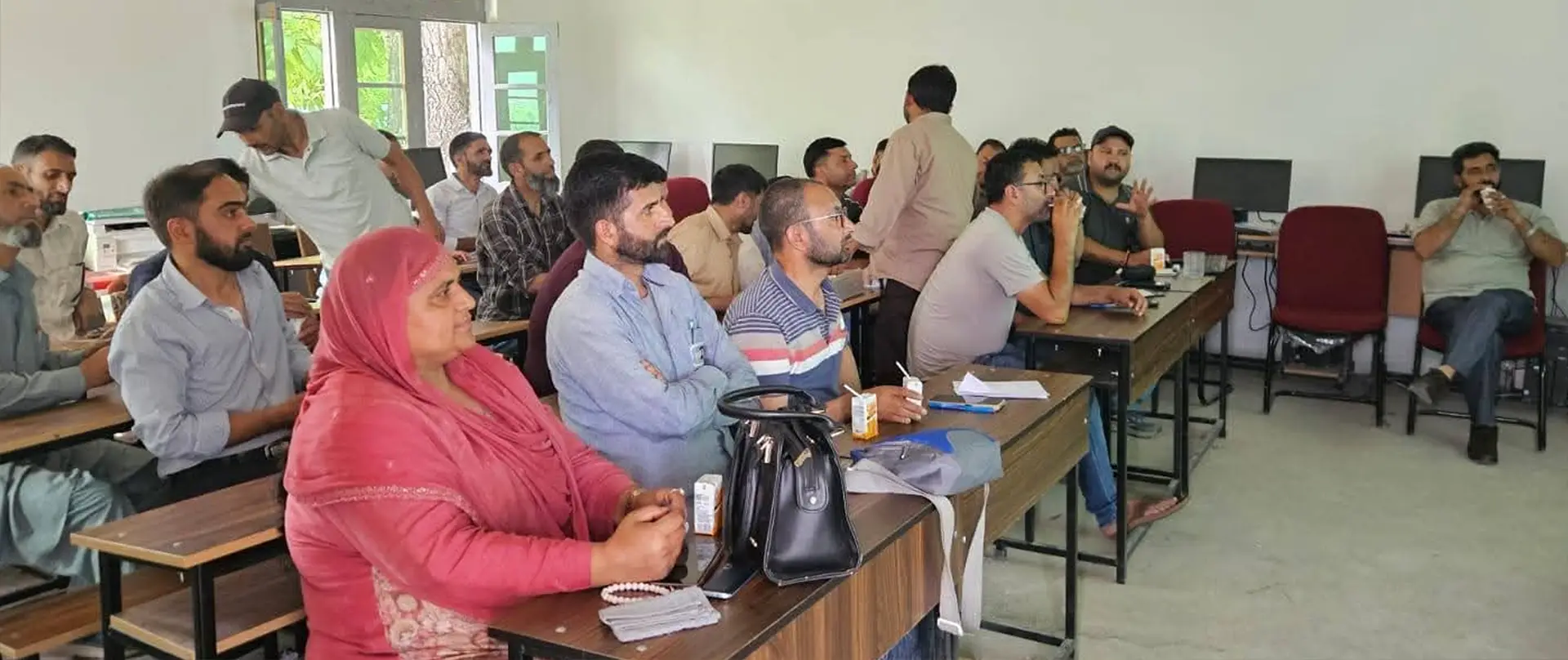
Teacher Orientation on the Shikshak Sahayak chatbot at Ganderbal
The clearest proof that this adoption was real, not compliance-driven, came from outside the rollout's own boundary. Teachers of Classes 9 through 12, grades the current rollout doesn't yet cover, began calling the VSK helpline asking to be included, after watching their colleagues in lower grades benefit. SCERT is now working with the state team to expand content into those grades, and into regional languages like Kashmiri, Urdu, and Dogri that teachers have specifically asked for. Nobody told these teachers to make that call. They made it because they saw something working next door and wanted it for their own classroom, for their own students.
This is the true power of proof over persuasion. A workforce has adopted a new tool faster than the tool's own target timeline, and then asked for more of it unprompted. That is a harder-to-manufacture kind of validation than any engagement dashboard can show on its own. Officers, too, freed from constant manual syllabus-tracking, are now spending more of their time on actual academic delivery rather than administrative chasing, a quiet efficiency gain sitting underneath the headline adoption number.
Read More from
ConveGenius


The Story Behind the Stories
Behind every field story in this newsletter sits ConveGenius's Market Presence & Brand team, turning WhatsApp updates and voice notes from Uttarakhand, Rajasthan, J&K, and Tripura into investor narratives, RVSK reports, and advocacy stories. What makes it sustainable isn't one well-written piece but a repeatable pipeline, and a cultural shift where field teams now volunteer their stories as habit, not compliance.
Learn More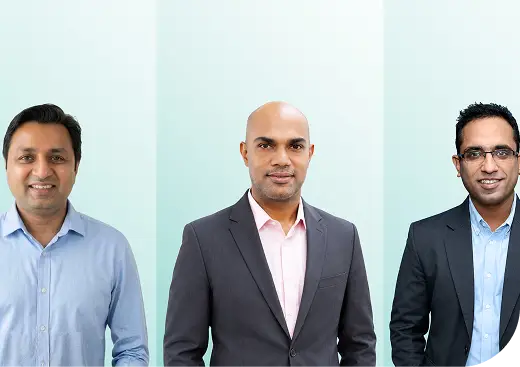
The People Joining Us at ConveGenius
ConveGenius strengthens its leadership bench with three senior hires: Saurabh Bansal (Chief Strategy Officer) to drive strategy and AI stack build-out, Saurabh Dayal (Senior Vice President) to lead go-to-market and revenue growth and Mohit Bahri (Senior Vice President) to head government and public-systems partnerships.
Learn More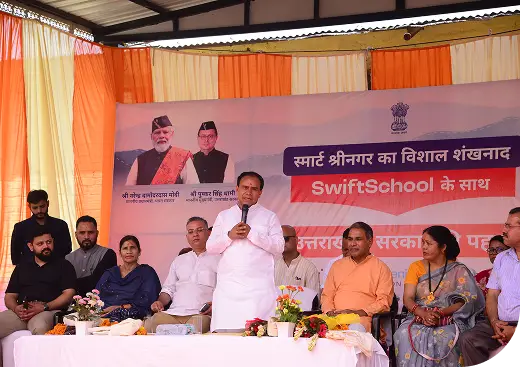
From Connectivity to Classrooms: Uttarakhand Launches 50 SwiftSchools
Uttarakhand has partnered with ConveGenius Foundation to roll out the SwiftSchool model across 50 government schools, an offline-first, personalised learning approach built for low-connectivity realities. With the second school already live in Srinagar and 1,000 laptops secured via an AWS-CSR partnership, the state has set its sights on scaling to ~2,000 schools, reaching 80% of its government-enrolled students.
Learn More