
Ground Impact and External Validation
Transforming Education through Data: Highlights from the RVSK’s National Consultation on VSK and APAAR
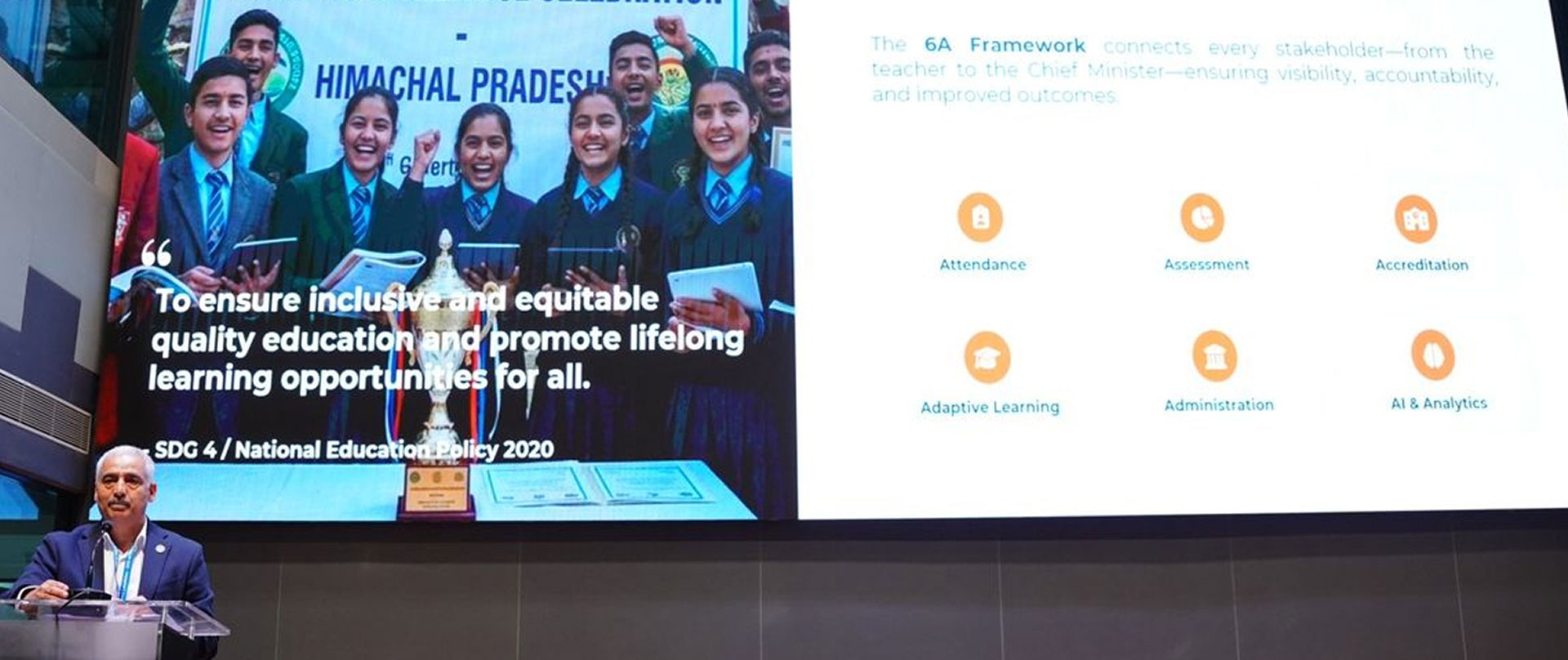
On February 23-24, 2026, RVSK hosted the National Consultation for Strengthening Digital Infrastructure at Hyderabad, Telangana focusing specifically on Vidya Samiksha Kendra (VSK) and the Automated Permanent Academic Account Registry (APAAR). This significant event brought together educational leaders, policymakers, and technical experts to advance the vision of the National Education Policy (NEP) 2020, which emphasizes data-driven governance and robust public digital infrastructure.
The VSK initiative was conceptualized to move Indian education from periodic reporting to real-time monitoring and evidence-based decision-making. As of February 2026, the progress is remarkable:
- 33 States and Union Territories have operationalized their VSKs.
- National institutions such as NCERT, NIOS, and CBSE have also established their own centers.
- The Rashtriya Vidya Samiksha Kendra (RVSK) at NCERT acts as the central nodal institution coordinating these efforts nationwide.
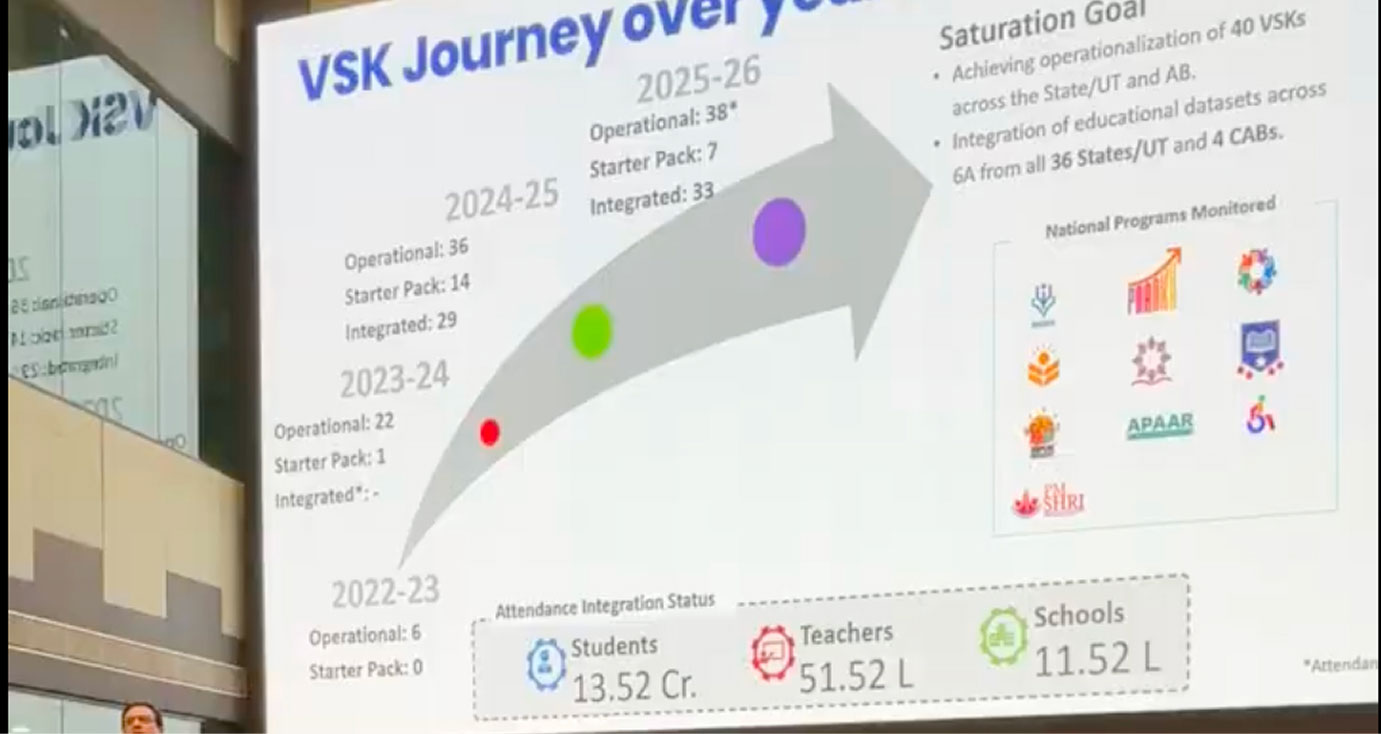
RVSk's reach from 2022-26
Central to the discussions was the 6A Framework, which integrates six critical pillars of educational data: Attendance, Assessment, Administration, Accreditation, Adaptive learning, and AI. By streamlining these areas, VSKs are transforming raw data into meaningful action.
The consultation featured best practices shared by our long standing partner states like Himachal Pradesh, Karnataka and Maharashtra.
Himachal Pradesh was in the spotlight at the consultation, being the first state to integrate datasets across all 6 pillars of the 6A framework. SPD, Himachal Pradesh shared stories of action and impact from the ground and first in the country 6A integrated dashboard was demonstrated to all attendees with a call to action for replicating the approach across all states.
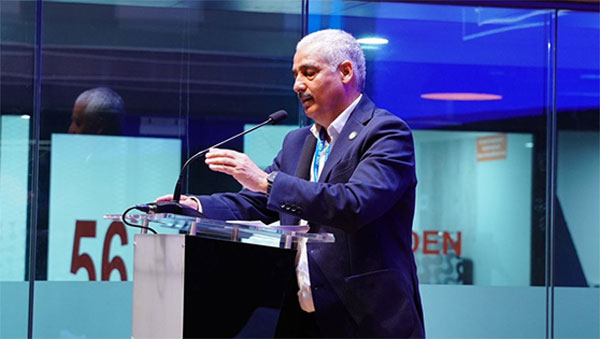
Shri Rajesh Sharma,
IFS State Project Director
A digital survey that participants were requested to fill at the end of day 1 highlighted the challenges being faced by the states that need attention:
- Financial: A significant need for diversified funding and addressing regional budget constraints.
- Operational: Persistent human resource shortages and difficulties in stakeholder engagement.
- Governance: Challenges in integrating private schools and maintaining inter-departmental coordination.
- Technological: Issues with data integration, connectivity in remote areas, and the complexities of AI integration.
Day 2 of the consultation shifted focus toward the saturation strategy for APAAR for both students and teachers, ensuring that every participant in the educational ecosystem has a digital identity.
Discussions also delved into integrating AI for data governance.
As noted by Shri Harikumar Janakiraman (MoE), the goal remains a transparent, inclusive, and responsive education system. By addressing the identified operational and technological gaps, India is poised to set a global benchmark in digital educational governance.
As India transitions from simple data aggregation to a structured, standards-driven governance model, the role of ConveGenius as a technical partner to RVSK has become a cornerstone of this digital evolution. By designing and operationalizing a secure, interoperable, AI-enabled national data integration backbone, ConveGenius is moving the needle from static dashboards to active, conversational governance.
At the heart of this work is the standardization of production-grade APIs across foundational domains: Attendance, Assessments, Accreditation, and Adaptive Learning. These are not just technical specifications; they are the protocols that ensure national comparability and data integrity across every State and Union Territory. This architecture directly addresses the Data Integration and AI Integration challenges identified by states during the national consultation.
The success of this partnership is best reflected in the operational models already active across the country:
- Himachal Pradesh: Leveraging the 6A framework and AI-enabled OCR assessments to rise into the Top 5 PARAKH rankings.
- Tripura & Uttarakhand: Achieving massive assessment coverage and digitized teacher training consumption.
- Gujarat & Karnataka: Implementing early warning systems and cross-departmental data lakes to protect and support millions of students.
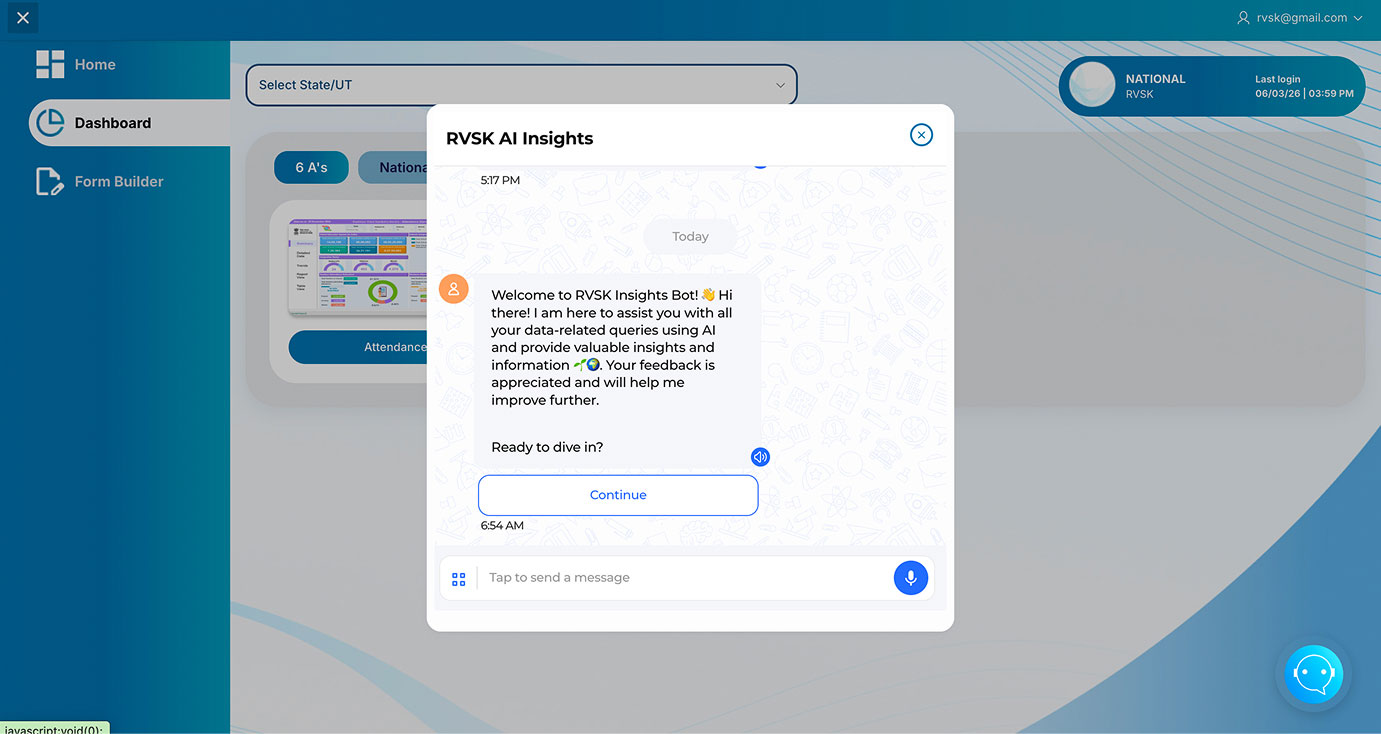
RVSK Insights bot embedded within the RVSk Portal
By embedding tools like the AI Insights Bot directly into the RVSK portal, ConveGenius is empowering authorized officials to query complex datasets using natural language, transforming how decisions are made at the highest levels of public education. As we look toward the next decade, ConveGenius is positioning itself not merely as an EdTech provider, but as the primary architect of Bharat’s education intelligence stack, ensuring that the digital infrastructure built today becomes the defensible backbone for the leaders of tomorrow.
Read More from
ConveGenius


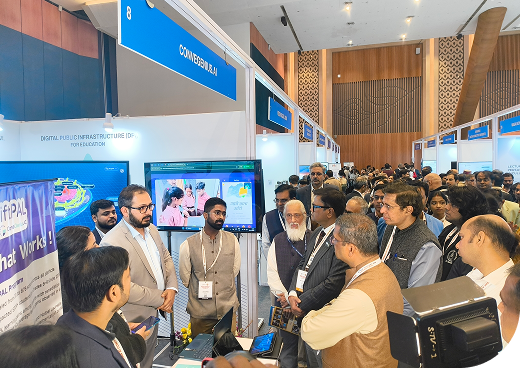
Democratizing AI for India’s Classrooms: ConveGenius and the Bharat EduAI Stack
The recent Bodhan AI Summit, held in Delhi in February 2026, marked a significant milestone in India's journey towards a sovereign digital future for education. The summit was organised by Bodhan.AI, an IIT Madras-incubated initiative supported by the Ministry of Education.
Learn More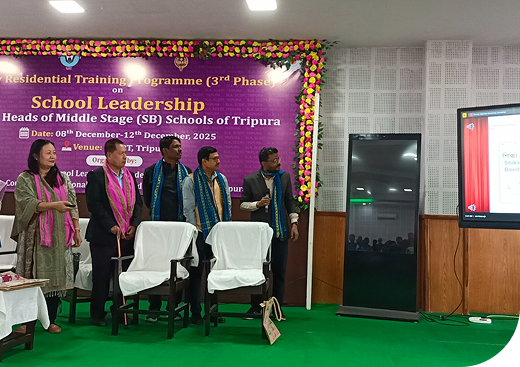
Shikshak Shakti: Empowering the Heart of Tripura’s Education System
Tripura has officially launched Shikshak Shakti (শিক্ষক শক্তি), a historic initiative that celebrates and amplifies "the power of teachers" across the state. This programme, introduced by the Department of Education under the visionary leadership of the Hon’ble Chief Minister and Education Minister, marks a powerful step toward stronger classrooms and a brighter future for all students.
Learn More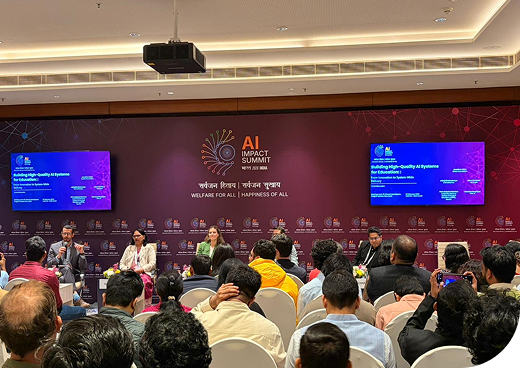
Scaling the "UPI of Education": Jairaj Bhattacharya at the India AI Impact Summit 2026
What if education could reach every child the way money reaches every wallet? That was the central provocation Jairaj Bhattacharya, Co-founder of ConveGenius, brought to the India AI Impact Summit 2026 in New Delhi.
Learn More