
External Representation and Media
From AI Pilots to Real Impact: What It Takes to
Scale AI in Education
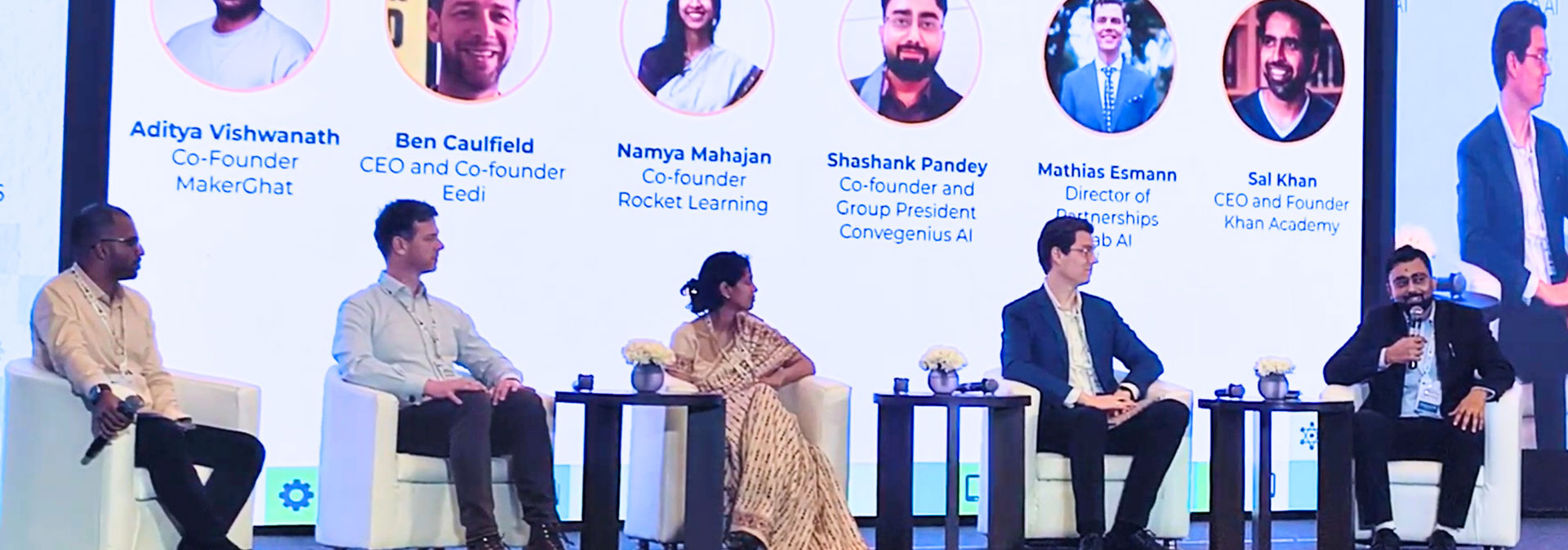
The conversation around AI in education is evolving quickly. At a satellite event of India AI Impact summit in New Delhi, leaders from government, philanthropy, and technology gathered to discuss a critical question: how do we embed AI tools into the everyday functioning of public education systems?
Representing ConveGenius on the panel, our co-founder Shashank Pandey shared perspectives on what it takes to build AI systems that work not just in controlled environments, but in real classrooms across large public education systems.
One idea that emerged during the discussion was a simple framework for what it takes for education technology to truly scale: it must be simple, deep, and affordable. Technology needs to be simple enough to become part of a teacher’s or student’s daily routine, deep enough to meaningfully improve learning outcomes, and affordable enough to work within public education systems. This philosophy is reflected in platforms like SwiftChat, where students and teachers can interact with learning tools naturally—simply by sending a message or speaking into their device.
The conversation also touched on the growing administrative burden placed on teachers. From tracking learning progress to managing initiatives like Holistic Progress Cards (HPC), educators often spend significant time on documentation. AI, as highlighted during the discussion, should reduce this burden rather than add to it. Instead of requiring teachers to fill out more digital forms, intelligent systems can capture learning signals organically during everyday classroom activities—whether through speech diagnostics, handwriting recognition, or student interactions. These insights can then feed directly into assessments and reports, helping reduce paperwork and giving teachers more time to focus on teaching.
Another important theme was the role of India’s expanding education data infrastructure. Through Vidya Samiksha Kendras (VSKs), the country has built one of the largest education data ecosystems in the world. But data alone is not enough. The real opportunity lies in using this data to guide timely interventions and better resource allocation.
And as education systems generate more data through platforms like Vidya Samiksha Kendras (VSKs), the focus is shifting from data collection to smarter use of that data. AI can help surface patterns across schools and districts, enabling faster and more targeted responses to learning gaps.
Recent insights from the Bharat Survey for EdTech (BaSE) 2025 reinforce why this moment matters. With more than 90% of households now having access to a smartphone, technology is reaching learners across the country at an unprecedented scale.
As emphasized during the summit, the challenge ahead is not just expanding access to technology, but ensuring it leads to meaningful improvements in learning for every student.
At ConveGenius, this vision aligns closely with the goal of “Sabka AI” - AI for all, where AI-powered learning systems strengthen public education and support teachers and students alike.
Read More from
ConveGenius


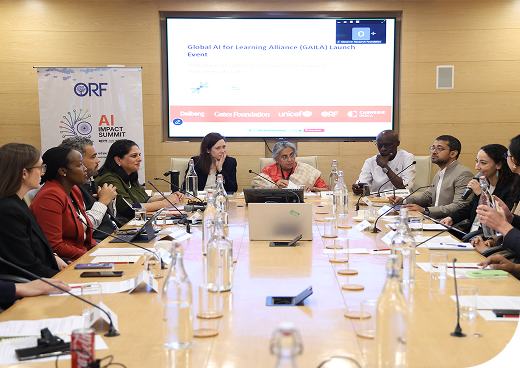
Accelerating "Sabka AI": The Launch of the Global AI for Learning Alliance (GAILA)
The landscape of global education is standing at a pivotal crossroads. On February 17, 2026, on the sidelines of the India AI Impact Summit, a landmark initiative was formally launched to ensure that the AI revolution leaves no learner behind: The Global AI for Learning Alliance (GAILA).
Learn More
Charting the Future: Empowering Students with the Career Tours Mini App
In an era defined by rapid technological shifts, preparing the next generation for the workforce requires more than traditional classroom learning. On December 3, we reached a major milestone in this mission with the launch of the Career Tours Mini App, a self-paced digital learning experience developed in partnership with Amazon Future Engineers.
Learn More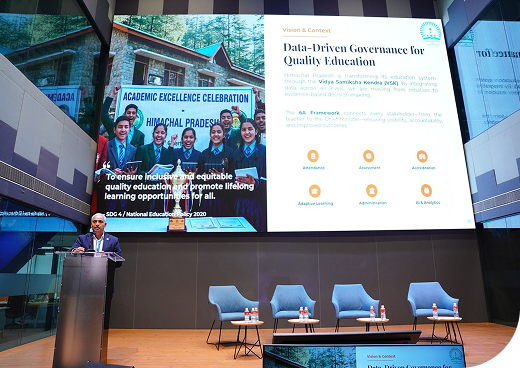
Transforming Education through Data: Highlights from the RVSK’s National Consultation on VSK and APAAR
On February 23-24, 2026, RVSK hosted the National Consultation for Strengthening Digital Infrastructure at Hyderabad, Telangana focusing specifically on Vidya Samiksha Kendra (VSK) and the Automated Permanent Academic Account Registry (APAAR).
Learn More